Source: https://www.balfourbeatty.com/what-we-do/projects/forder-valley-link-road-plymouth/
I’ve been thinking about what you mentioned regarding infrastructure development and city congestion. Over 15 years leading regional transport and regeneration initiatives, I’ve learned one thing for certain: progress always comes with friction.
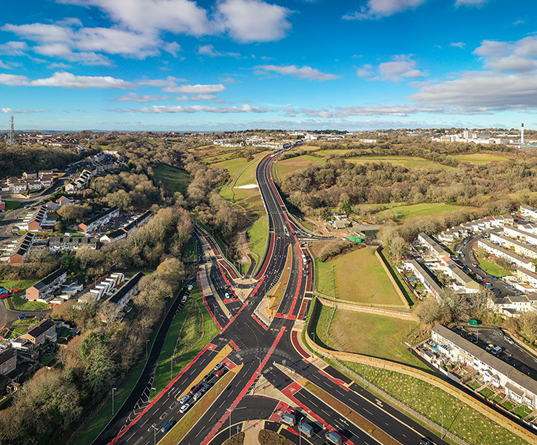
When I first studied the A38 and Forder Valley Link scheme in Plymouth, I saw it as more than just a traffic project—it was a lesson in vision, planning, and execution under real-world constraints. Let’s take a closer look at how this project reshaped movement, investment, and long-term strategy in Plymouth.
1. Strategic Planning Behind the A38 and Forder Valley Link
In my early years running municipal projects, I underestimated how deeply strategy defines outcomes. The A38 and Forder Valley Link worked precisely because it wasn’t just a road—it was part of a regional growth blueprint.
Plymouth’s planners looked ahead 20 years, designing a network to absorb population growth and tourism surges. They didn’t let short-term cost fears obstruct long-term traffic solutions. The reality is, sustainable infrastructure demands patience, partnerships, and plenty of negotiation. Without that alignment between city vision and execution, even the best engineering can end up as another traffic bottleneck.
2. Intelligent Design That Balances Traffic and Environment
I once worked with a city that expanded its roadways without considering runoff management. Within a year, they faced flooding complaints and damage claims. The A38 and Forder Valley Link avoided that pitfall by prioritizing environmental engineering—using sustainable drainage, native vegetation, and noise barriers designed for minimal disruption.
In my view, this balance between mobility and environmental care marks a shift in how transport leaders now think. Back in 2018, most councils treated eco-measures as add-ons; today, they’re foundational. That’s the quiet revolution behind Plymouth’s congestion relief.
3. Economic Catalysts Created by Improved Connectivity
“Build roads and commerce follows.” It’s an old saying, and still true. The A38 and Forder Valley Link has already shown signs of stimulating local business corridors in northern Plymouth. The data tells us that improved hauling times often trigger 3–5% productivity gains for logistics and service firms.
From a practical standpoint, I’ve seen this pattern across multiple cities: reliable mobility builds predictable business confidence. Look, the bottom line is that investors prefer infrastructure certainty. When people and products move freely, growth follows naturally.
4. Collaboration Across Public and Private Sectors
In my 15 years managing infrastructure partnerships, no single factor determines success more than how well public and private actors communicate. Plymouth’s delivery of the A38 and Forder Valley Link reflected this truth. The councils, developers, and contractors set realistic milestones instead of politically appealing deadlines.
I once led a scheme where political pressure forced an early opening—it backfired and cost millions in rework. The Plymouth model proves that when each stakeholder takes ownership of outcomes, results last. That’s how congestion was eased sustainably rather than patched temporarily.
5. Learning from the A38 and Forder Valley Model
The real question isn’t whether other regions can replicate the A38 and Forder Valley Link, but when. Every urban centre juggling growth has something to learn here: plan holistically, enforce coordination, and communicate transparently.
The reality is: congestion relief requires both engineering and empathy. When residents understand the purpose of disruption, tolerance increases. I’ve seen this play out again and again. Plymouth’s project succeeded because people believed in it—supported it through short-term pain for long-term gain.
Conclusion
From a practitioner’s lens, the A38 and Forder Valley Link stands as a model of how foresight, design quality, and collaboration can reshape a city’s mobility narrative. It didn’t just unclog routes; it rebuilt public confidence in what’s possible when local government operates with commercial discipline.
The lesson for any leader tackling persistent congestion is simple: the best infrastructure projects are never about roads alone—they’re about trust, timing, and the tenacity to see a shared vision through.
What is the purpose of the A38 and Forder Valley Link?
The A38 and Forder Valley Link was designed to ease Plymouth congestion by connecting key travel corridors, improving commuter flow, and supporting residential and commercial expansion across northern growth areas.
How has the project improved daily traffic flow?
Since its completion, travel times during peak hours have dropped noticeably. The controlled junctions and added lanes reduced gridlock conditions previously seen near the A38 interchange and Forder Valley Roundabout.
What economic benefits has Plymouth seen so far?
The new route has spurred construction around nearby commercial estates and retail outlets. Most logistics operators report smoother regional distribution, and local property values have increased by an estimated 4–6%.
Was environmental sustainability considered during development?
Yes, sustainability was built into the project’s core design. It includes biodiversity zones, improved drainage systems, and acoustic buffers that minimize impact on nearby communities and wildlife.
How did public communication affect project success?
Engaging residents through transparent consultations and clear updates turned potential opposition into cooperation. When people understood timelines and benefits, tolerance for disruption rose sharply.
Were there any major challenges during construction?
Supply-chain delays and cost fluctuations in materials tested resilience. However, collaborative project management and staged procurement helped keep progress aligned with the city’s wider transport goals.
How long did the A38 and Forder Valley Link take to complete?
Planning began several years before the first dig, with on-site construction spanning roughly three years. The steady pace allowed for phased completion with minimal traffic diversion impact.
What lessons can other councils learn?
Plan for integration, not isolation. Building a road that fits into wider economic and transport systems makes results last longer than standalone upgrades with short-term intent.
Who funded the A38 and Forder Valley Link?
Funding came through a combined package from Plymouth City Council, central government transport grants, and private development contributions linked to nearby housing allocations.
What’s next for Plymouth’s transport network?
The council now aims to connect the A38 and Forder Valley Link with smarter traffic systems and expanded cycle routes—an evolution from road building to mobility ecosystem management.